Archive
AHA MEDIA is very proud to announce Christoph Runné’s new website in Vancouver
AHA MEDIA is very proud to announce Christoph Runné, our teacher in Experimental Filmmaking brand new website!.
We are proud to help create and maintain http://christophrunne.wordpress.com !!
——————————————————————————————————————————————————————–
Christoph Runné is a Vancouver-based experimental film, video, and installation artist. Through his work, he explores the unhidden yet seemingly invisible world around us. He creates visual tone poems with a humanitarian heartbeat whose minimalist and impressionistic methodology contradicts the complex human conditions with which Runné engages.

AHA MEDIA is very pleased to learn how to create Experimental Film loops from Filmmaker David Rimmer – Pioneer of moving images at Interurban Gallery in Vancouver Downtown Eastside
AHA MEDIA is very pleased to learn how to create Experimental Film loops from Filmmaker David Rimmer – Pioneer of moving images at Interurban Gallery in Vancouver Downtown Eastside
David Rimmer http://www.DavidRimmerFilm.com
——————————————————————————————————————————————————————
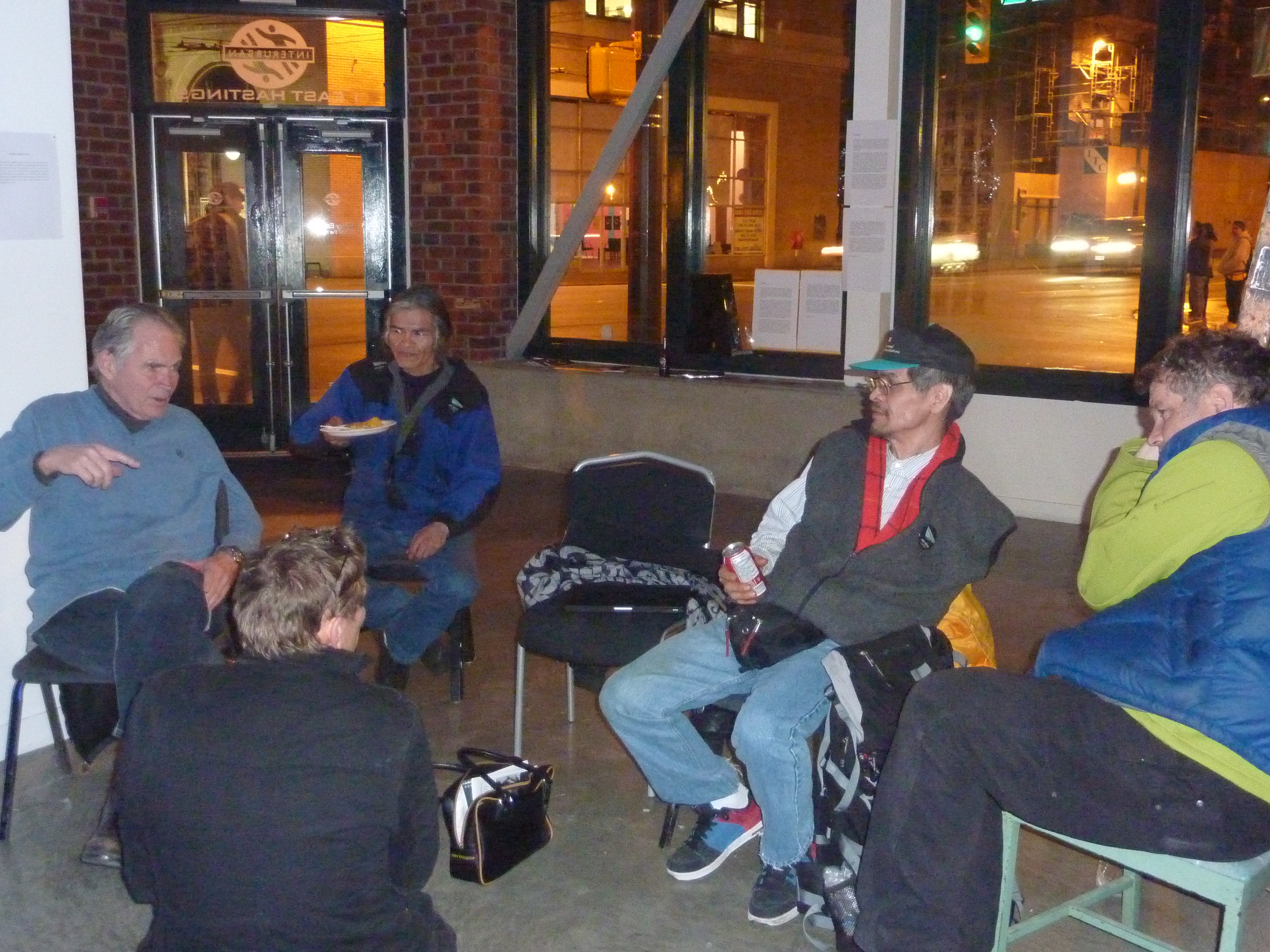
Below is a photo of James Diamond, Frederick Cummings learning to splice 16 mm films from our teacher David Rimmer 🙂

———————————————————————————————————————————————————
In this video, April Smith of AHA MEDIA is helped by Frederick Cummings, James Diamond, Christoph Runne with stretching out a very long loop of 16mm film with our teacher David Rimmer sitting and looking on.
(No Audio in this video)
This video was filmed by Richard Czaban of AHA MEDIA on a New Media camera Fujifilm S200EXR. AHA MEDIA is about exploring mobile media production through New Media cameras. For a better quality version of this video, please DM April Smith @AprilFilms on Twitter or Facebook.com/AprilFilms
——————————————————————————————————————————————————————–
In this video, April Smith of AHA MEDIA learns how to splice 16mm film by Frederick Cummings, James Diamond, with our teacher David Rimmer sitting and looking on.
This video was filmed by Richard Czaban of AHA MEDIA on a New Media camera Fujifilm S200EXR. AHA MEDIA is about exploring mobile media production through New Media cameras. For a better quality version of this video, please DM April Smith @AprilFilms on Twitter or Facebook.com/AprilFilms
———————————————————————————————————————————————————-
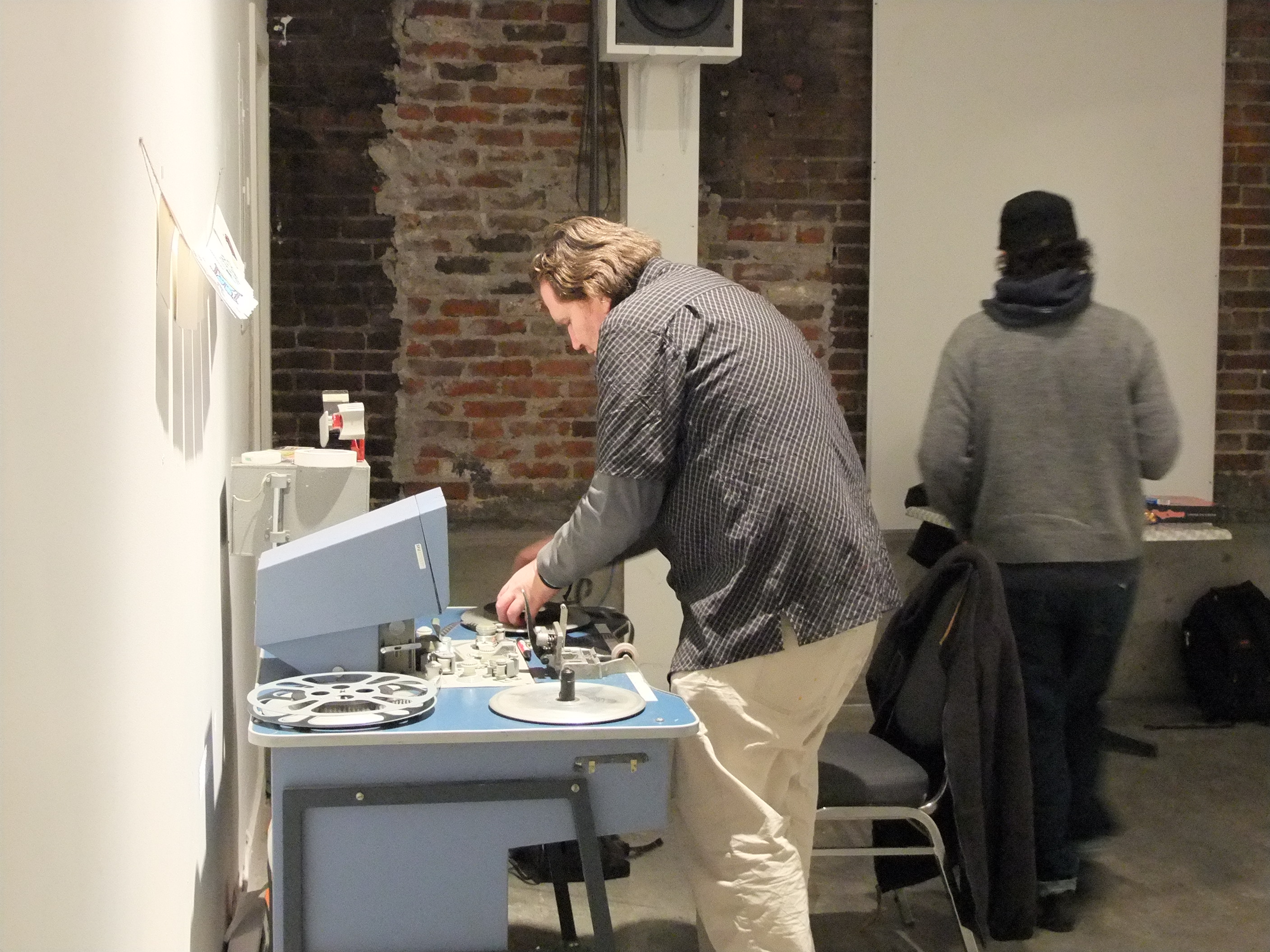
In this photo, is Frederick Cummings with James Diamond making experimental film loops with 16mm films.
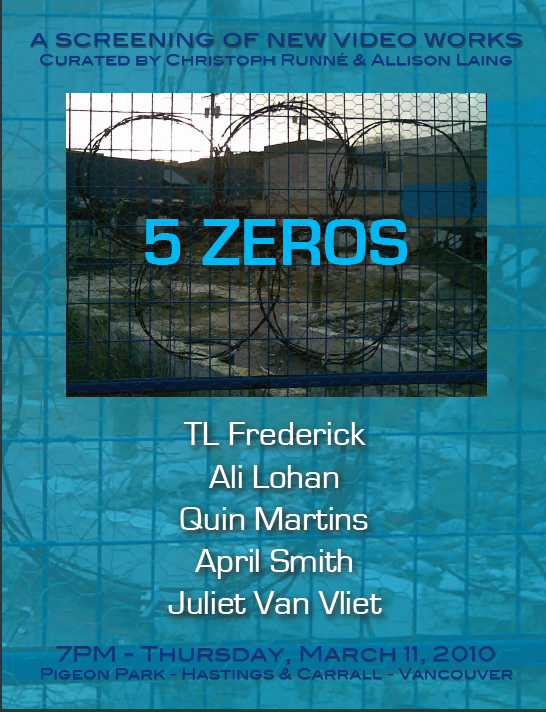
AHA MEDIA is very proud to attend 5 Zeros – A screening of new video works by LifeSkills Collective at 7pm on Thurs March 11, 2010 in Pigeon Park, Vancouver Downtown Eastside (DTES)
AHA MEDIA congratulates the LifeSkills Collective for 5 Zeros – A screening of new video works!
TL Frederick
Ali Lohan
Quin Martins
April Smith
Juliet Van Vliet
and Christoph Runné & Allison Laing!
—————————————————————————————————————————————–
AHA MEDIA is very proud to present at 5 Zeros – A screening of New Video Works in Pigeon Park on Thurs March 11, 2010
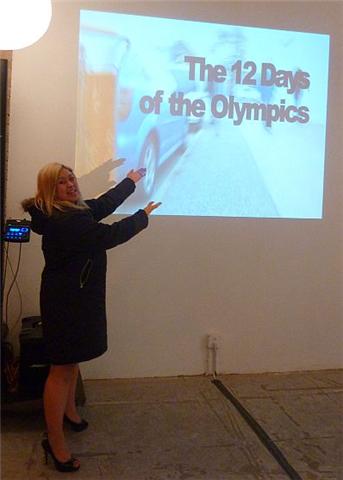
The 12 Days of Olympics (2010)
Digital Video, Colour, 8:39 minutes

The 12 Days of Olympics is a short video presented in two parts, both of which offer differing social reactions and unresolved political anxieties associated with poverty, community representation, and the 2010 Winter Olympic Games held in Vancouver, Canada.
Formulated around the familiar Christmas carol, “The Twelve Days of Christmas,” this project anticipates and contextualizes urban-specific dilemmas that pose the greatest threat to some of the most vulnerable members in Vancouver’s Downtown Eastside.
Highlighting issues such as budget cuts, heightened security, seemingly never-ending road closures, corrupt Olympic games, and an “eternal” deficit, while also providing a balancing viewpoint of friendly sports competition and world – wide happy camaraderie that is both insightful and inspiring, this project – which was shot just a few months before the Winter Games – offers two competing and humorous perspectives associated with living in a city that is about to host the Winter Games.
To be sure, the Olympics are not designed for marginalized communities such as Vancouver’s Downtown Eastside, but it is through their unrestrained opinions and curiously contagious enthusiasm that the viewer can acknowledge the inherent contradiction made obvious by the Olympic games themselves: despite attempts to unify the world, this large-scale event, by its very nature, has the reverse effect, because it excludes the majority of the population (most specifically, the poor) from its celebration.
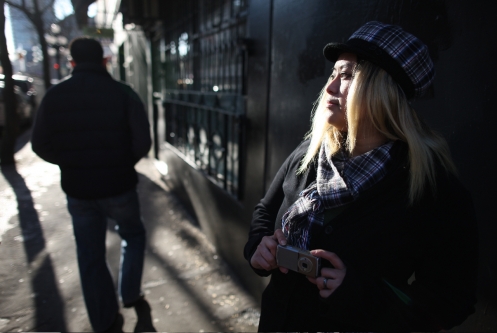
April Smith is a Vancouver-based videographer and documentarian who lives and works in the Downtown Eastside. Through art, music, and community promotion, she is a self-taught advocate for social outreach and neighborhood unity. Using social media, new media, mobile technology, and video, she concentrates on sharing the stories and voices of an otherwise-silenced community with a global audience.
Co-founder of AHA MEDIA, her practice includes educational and political cartooning, facilitating social, new and mobile media literacy workshops, as well as recording subversive and situational observations of her own community. Most recently, her work was published in Megaphone Magazine.
Photo of April Smith by Simon Hayter
AHA MEDIA was very honored to meet Filmmaker David Rimmer – pioneer of experimental moving images at Interurban Gallery in Vancouver Downtown Eastside (DTES)
AHA MEDIA was very honored to meet Filmmaker David Rimmer – pioneer of experimental moving images at Interurban Gallery in Vancouver Downtown Eastside (DTES)
http://www.DavidRimmerFilm.com
Born and raised in Vancouver, Rimmer graduated from the University of British Columbia with a B.A. in English Literature in 1967. Inspired by Stan Brakhage’s films and writings, he made his first important experimental films, Square Inch Field and Migration, in 1968 and 1969 respectively.
At the time the artist-run Intermedia Co-op in Vancouver and supportive individuals in the Vancouver offices of the Canadian Broadcasting Corporation (CBC) and the National Film Board of Canada (NFB) were providing Vancouver-based experimental filmmakers with access to surplus film, processing, optical printers and other post-production facilities. These filmmakers, Rimmer included, soon became part of the international experimental/avant-garde/underground film movement of the late ’60s and early ’70s.
————————————————————————————————————————-
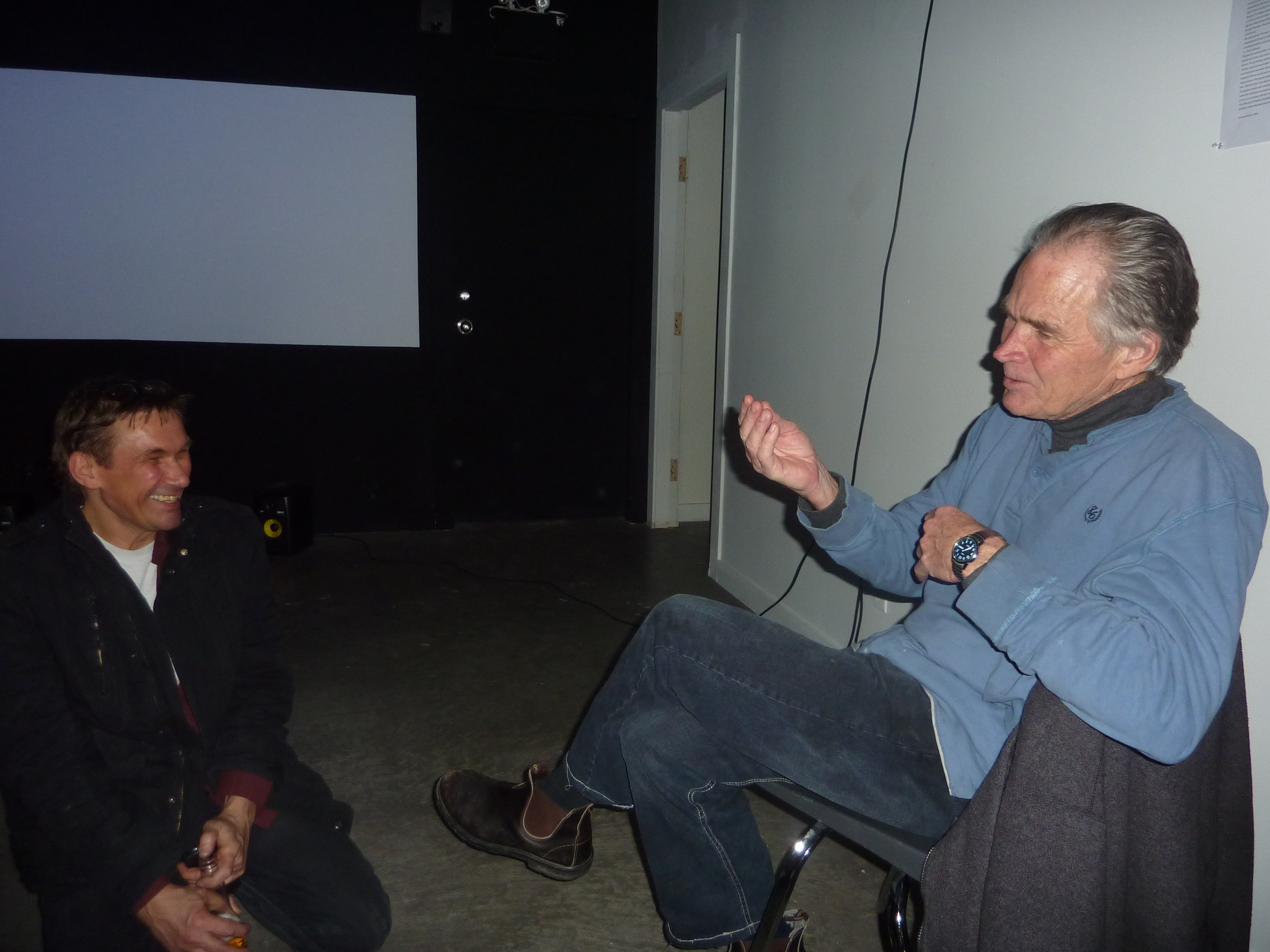
Below is our teacher Christoph Runne with David Rimmer
———————————————————————————————————————————————————–
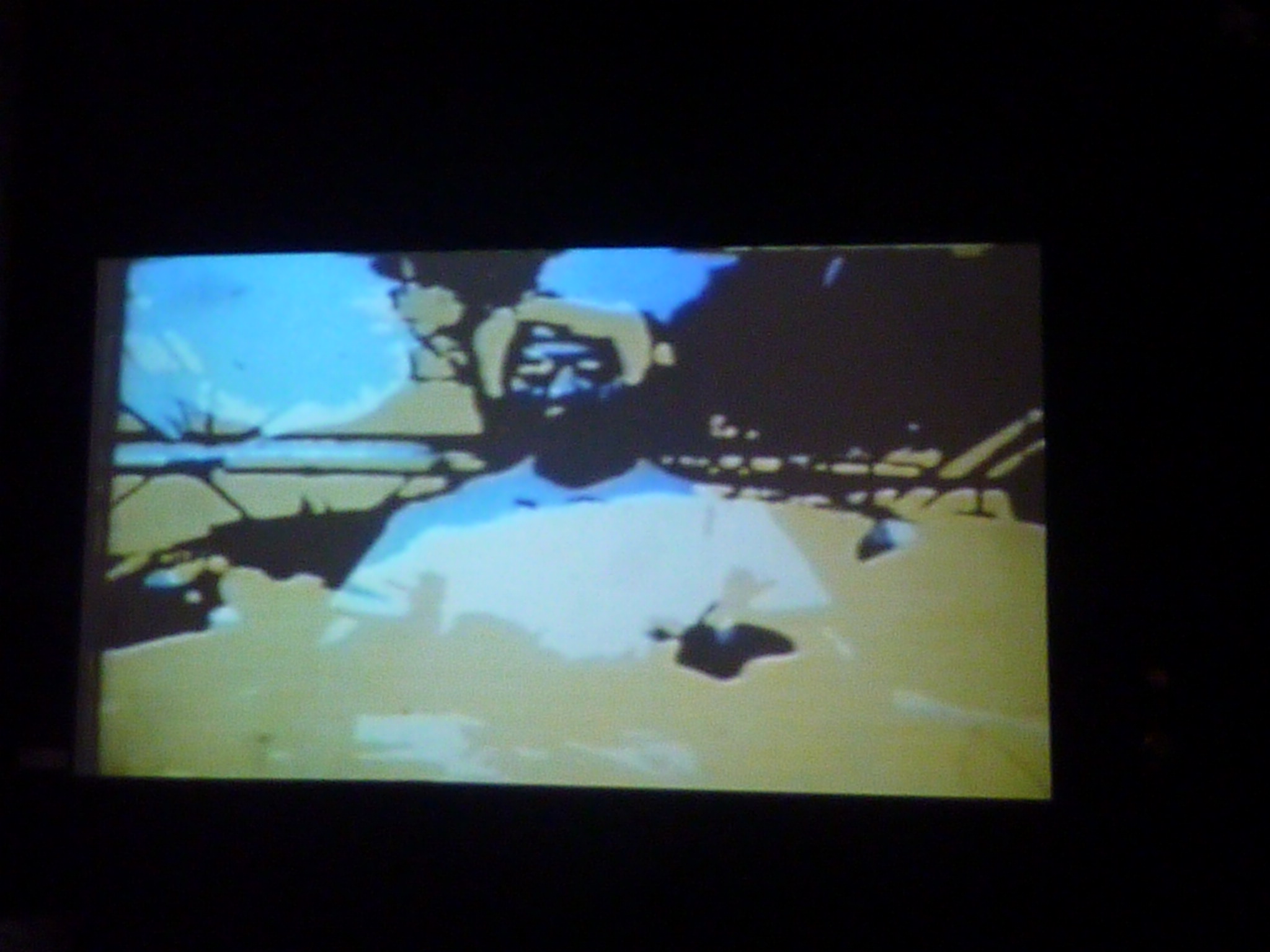
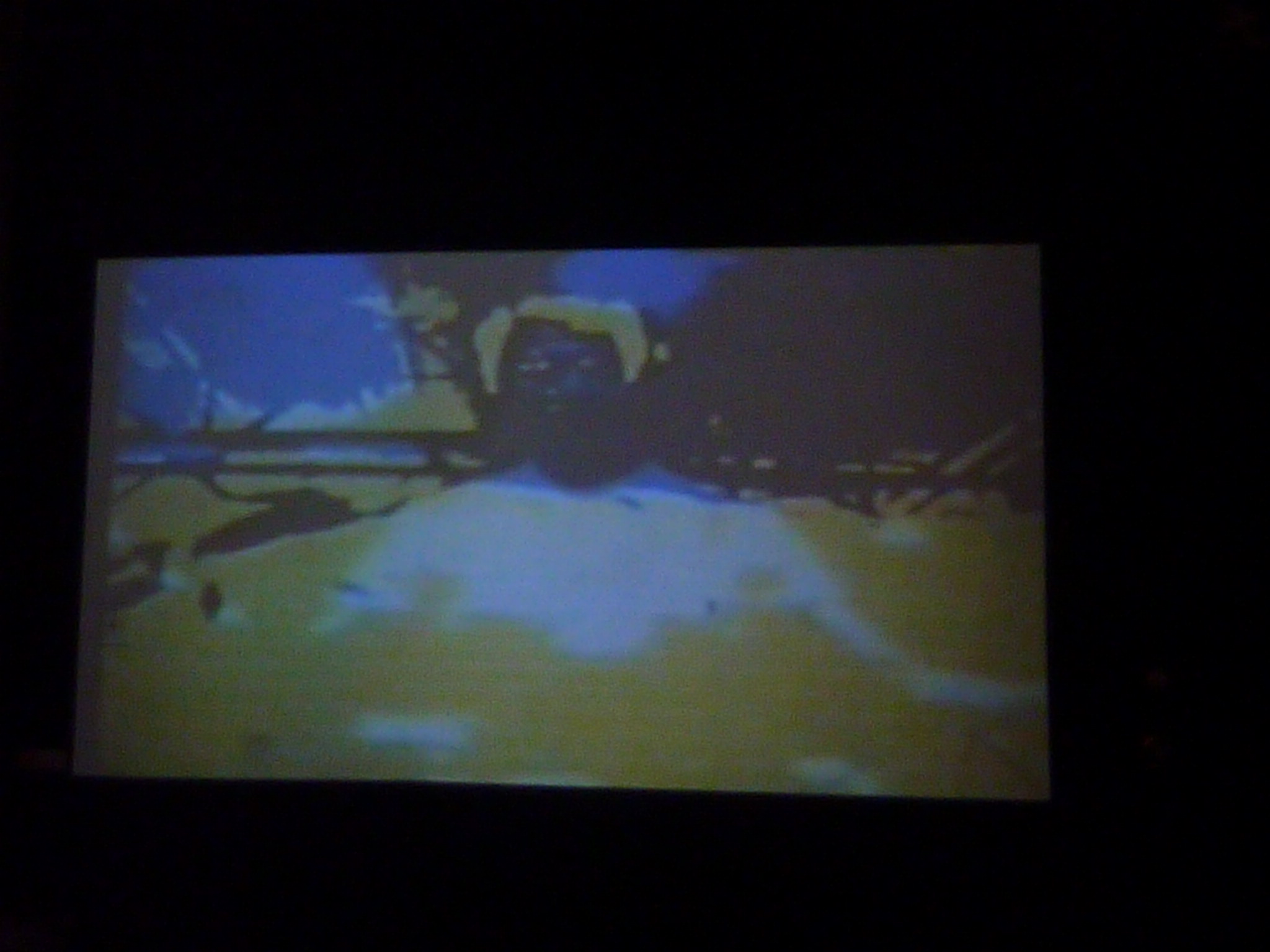
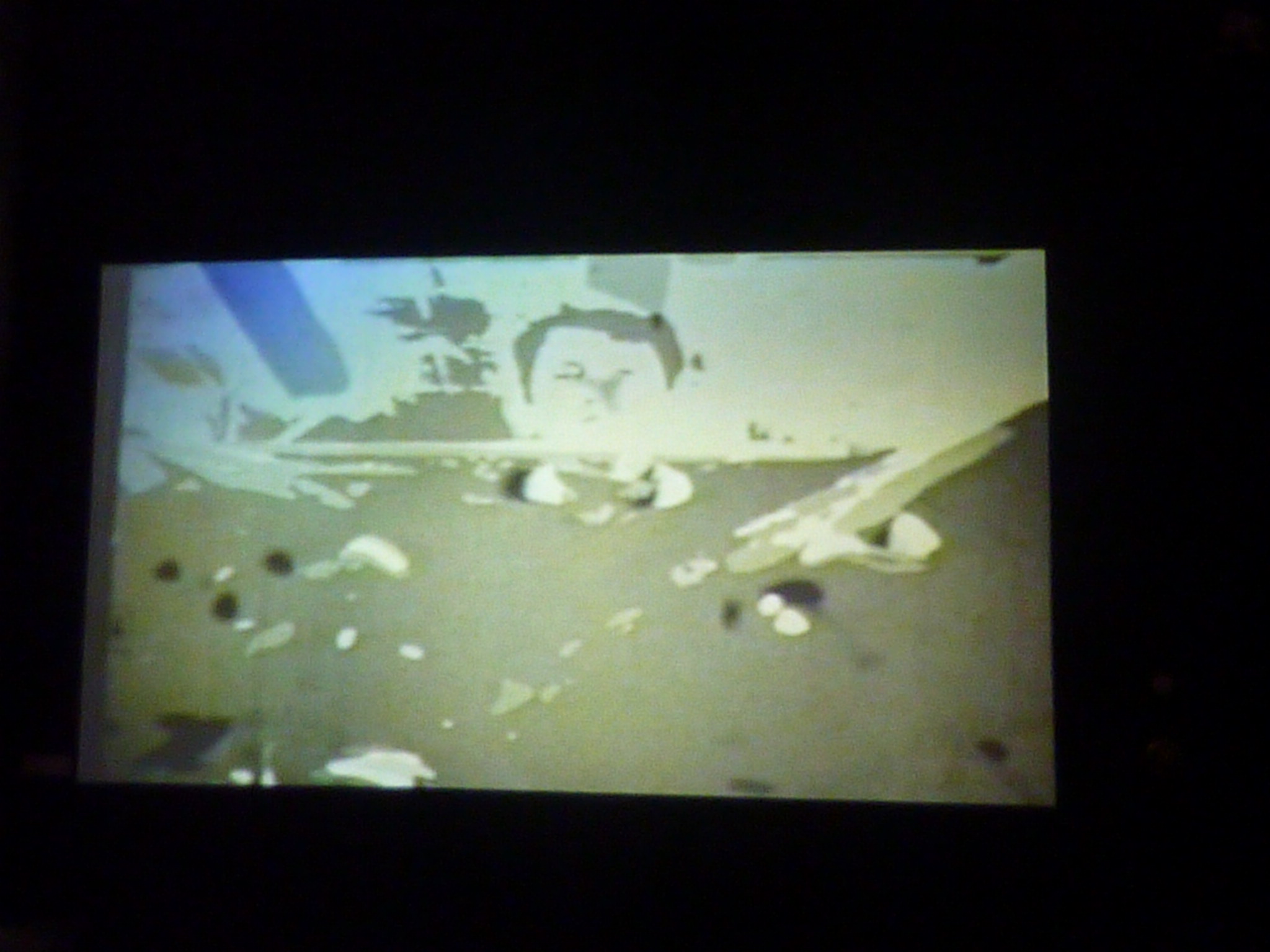
Rimmer was also making film loops for performance pieces. This led to the production of several loop films, including what is probably his most widely seen film, Variations on a Cellophane Wrapper(1970), made from a short segment of an NFB documentary.
Below are some photos from his film: Variations on a Cellophane Wrapper(1970)
AHA MEDIA is very proud to help announce Filmmaker David Rimmer – pioneer of experimental moving images and his presentation at Interurban Gallery in Vancouver DTES at 7pm Tuesday March 2, 2010
AHA MEDIA is very proud to help announce Filmmaker David Rimmer – pioneer of experimental moving images and his presentation at Interurban Gallery at 7pm Tuesday March 2, 2010
Below is a bio of David Rimmer from…
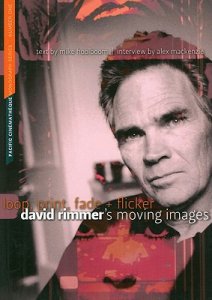
Born and raised in Vancouver, Rimmer graduated from the University of British Columbia with a B.A. in English Literature in 1967. Inspired by Stan Brakhage’s films and writings, he made his first important experimental films, Square Inch Field and Migration, in 1968 and 1969 respectively. At the time the artist-run Intermedia Co-op in Vancouver and supportive individuals in the Vancouver offices of the Canadian Broadcasting Corporation (CBC) and the National Film Board of Canada (NFB) were providing Vancouver-based experimental filmmakers with access to surplus film, processing, optical printers and other post-production facilities. These filmmakers, Rimmer included, soon became part of the international experimental/avant-garde/underground film movement of the late ’60s and early ’70s.
Rimmer was also making film loops for performance pieces. This led to the production of several loop films, including what is probably his most widely seen film, Variations on a Cellophane Wrapper(1970), made from a short segment of an NFB documentary. Found footage was also the source forThe Dance (1970), Seashore (1971), Surfacing on the Thames (1970) and Watching for the Queen(1973). In the last two, step printing reduces movement to a minimum, giving the viewer time to contemplate minute details in each frame of the film, including the changing patterns in the grains of emulsion. While Rimmer returned to found footage for a few later films such as As Seen On TV (1986) and Divine Mannequin (1989), he was also drawing upon his own filmed images of his West Coast environment – the ocean, the coastal forests and inlets – for personal, poetic films of subtle beauty and an introspective appreciation of the shapes, colours, textures and rhythms of nature. Narrows Inlet (1980) and Local Knowledge (1992) are notable examples. Rimmer also discovered fascinatingmise en scènes by setting up his camera at a window and periodically recording what transpired outside – in the street in front of a New York pizza parlour for Real Italian Pizza (1971) and in a Vancouver railroad yard with water and mountains in the background for Canadian Pacific I (1974) and Canadian Pacific II (1975). Taking a very different tack, Rimmer made Al Neil: A Portrait in 1979. It was the first of nearly a dozen films that perhaps can be best categorised as experimental documentaries. Since 2002, he has been hand-painting frames of 35mm film for works released on video, best represented by An Eye for an Eye (2003). Rimmer’s oeuvre of nearly 50 films and videos also includes works shot and released on video, as well as pieces prepared for gallery presentations.
Because of their variety of techniques, genres and subject matter, Rimmer’s films and videos defy the usual critical and scholarly efforts to label and generalise about an artist’s work as a whole. Much of his film work of the 1970s falls within the parameters of the structural and structural-materialist films that dominated experimental filmmaking during that decade, and a select group of his films can be placed in the category of “landscape films” (1). But, as Catherine Russell observed in a 1993 essay (to which I will return), “The body of Rimmer’s work…is a fragmented and historical text” (2). That “text”, which has continued to grow in variety as well as in number of “fragments” since Russell’s essay appeared, has not yet received the kind of critical attention accorded the work of other major Canadian experimental filmmakers, such as Michael Snow, Joyce Wieland and Jack Chambers. WhileLoop, Print, Fade + Flicker provides a useful introduction to Rimmer and his work, it does not provide the detailed critical study that Rimmer’s accomplishments as a film artist deserve.
Follow Us!


 AHA Media