Archive
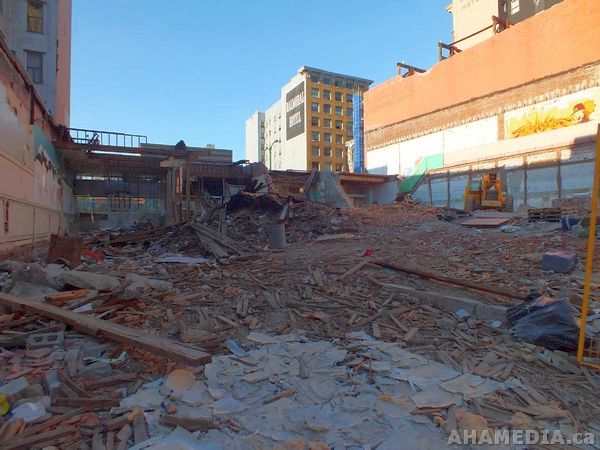
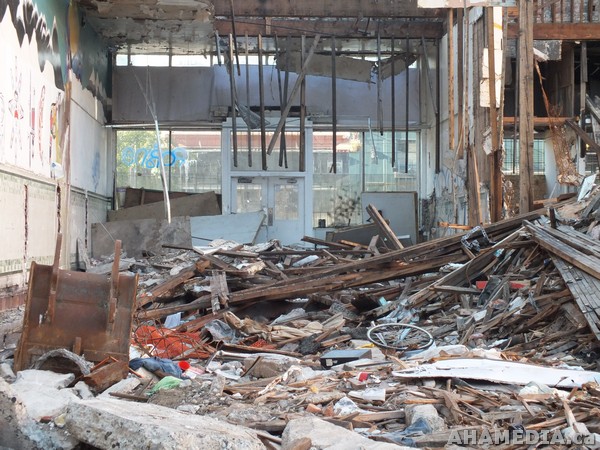
Demolition of Pantages Theatre in Vancouver Downtown Eastside (DTES)
From Ivan :
“Watch your head on the 100-block… the sky really is falling!”
Weekly disaster report from the Pantages demolition August 21, 2011
Over the last couple weeks the contractor at the Pantages demolition has removed the tunnel over the sidewalk, ditched the flaggers who shepherded pedestrians along the sidewalk when there was a risk of falling rock and other debris, and put up a scaffolding wrapped in blue netting. This was one piece of what DTES residents, groups, and allies have been asking for in the form of basic health and safety protections for 100-block residents against the reckless, irresponsible and disrespectful demolition job being carried out by the contractor under property owner Marc Williams and developer Sequel138.
Basic safety, which we feel would have been standard in any other residential (or shopping) neighbourhood in the city, would include netting over the front of the building to prevent loose rock fall, and also a plywood tunnel to protect pedestrians. It would mean that loose rubble in the demolition site would be sprayed with water regularly to stop dust, dry rat droppings, asbestos, lead paint, and mold spores from blowing up into the open windows of homes overlooking the site.
And it would mean that rubble would not be left standing for four months as both a fire and a down-wind contaminant hazard.(*see note at bottom)
For four months we have been calling and writing the city and Worksafe BC and saying, “Someone is going to get hurt. People are going to get sick. Someone is going to get hurt.”
On Friday August 19th at 11am a full brick was dropped from the 6th story roof of the Pantages theatre demolition into a stream of passing pedestrians. It landed between two pedestrians and smashed apart on the sidewalk. A large chunk of the brick bounced up and struck Mike Whelan, who lives in the Regent hotel, in the side of his head. Mikecomplained of dizziness and went home to rest, where he started throwing up. He went to a clinic and was sent on from there to the hospital to be treated for a concussion.
I called Ron Dyke, the head of the city building inspections department, twice and left a third message through 3-11. Ian Mackie, the inspector for the district showed up pretty shortly and said nothing, just took notes. I tried to convince him to shut the sitedown and he would not engage with me.
I visited Mike in the Regent and was amazed at what I saw. He lives on the 6th floor with his wife Karen. Their room overlooks the Pantages demolition and the view from their window is worse than I previously imagined.
Mike said, “I worked in construction and demolition for a long time and I can recognize asbestos. See that white stuff there between the big joists?” He pointed out the window at the roof timbers a floor below his window. “I’m pretty sure that’s asbestos.” I asked him if he had ever seen the contractor spraying down the ample dust and dirt on that roof area. He said he didn’t know they were spraying anywhere on the site, he had never seen it and the site always looked bone dry. The dust comes in their windows all day and night.
“I dust twice a week and there’s always dust on everything,” Karen said. She showed me her bedstand as an example; there was about a quarter inch of dust with clumps of debris mixed in it. Even though it’s hot, she said, they sleep with their windows closed.
“I have asthma and cancer,” Mike said. “The asthma was never a big deal but since the demolition started I’ve been going through one asthma puffer a week.”
I called Yolande Cole from the Straight and she came and did an interview with Mike and Karen about the health and safety fallout from the Pantages demolition. It should be on the Straight website on Monday or Tuesday. I left them with promises that they would go to the clinic and the hospital.
A couple hours later Ron Dyke from the city called me back. I asked him what conditions they gave the contractor for reopening the demolition site. He said that they had not shut the site down. There was some loose mesh near the top of the scaffolding where the brick had fallen through and they had made sure that hole was closed up.
I flipped out and yelled at him. “If that was Gregor Robertson who got a concussion from being hit in the head with a brick off that building would you have declared it a safe demolition site an hour later?”
He said that he did not want to discuss politics with me. It was not the first time he had said that to me. I accused him of being structural violence that singles out poor, SRO resident, disabled, Indigenous people for different treatment, and abuse than white middle-class people. I told him that he should be doing everything he can to protect these most vulnerable people and worry over this should keep him up at night… and he hung up on me.
Later Brenda Prosken called me back and asked if she could help. I told her what we have been telling Ron Dyke for months, the basic needs that should be met at Pantages as they would have been met anywhere else in the city. This is a high-density residential area, I told her, and the city is treating it like a people-less industrial wasteland. She said they will make sure that the site is regularly sprayed down, that the rubble is all cleared out by Tuesday, that a tunnel and flaggers are brought back, and that the affected residents are cared for.
This week I hope that we can visit residents in the Regent and Wonder hotels and find out how far reaching the negative health effects of the demolition have been. I believe that the poor conditions of the Pantages demolition are a powerful symbol of how bad the Pantages condos will be for the same neighbours. The demolition is poisoning the air in the SRO hotels on the 100-block and harming residents.
Condos will poison the space on the 100-block for low-income residents too. Marc Williams says that he’s going to bring artists to the 100-block but the man whose fly-by-night demolition project gave a concussion to is an artist who lives in the Regent hotel, who was recently accepted to Emily Carr art school. How is this poisonous demolition helping him? How will condos next door to his hotel help him?
The sky is falling on the residents of the 100-block and we have to work together to protect the people while defending the land from the mutually destructive forces of gentrification.
In solidarity,
Ivan
[*When the old gas station was demolished on Pender street a couple weeks ago they had firehoses on site right away to keep the dust down and the rubble was completely cleaned-up and gone within the week. What’s the difference between the demo jobs on the same block (but onopposite sides)?
The Pender St gas station demolition has nolow-income residents’ windows overlooking it… but it is immediately behind the Keefer Bar and high-end hotel. It is within sight of the Chinatown night market tourist site. Pantages, where the rubble has sat stinking and ugly and as a fire hazard for nearly 4 months, is out of sight from any tourist area or shopping district. There’s no condo in sight either. But there are lots and lots of SRO hotel rooms…]





Wayde Compton shares history of the African American community for W2 Soul Garden in Vancouver Downtown Eastside (DTES)

Soul Gardens Public Art Project

Time: July 5, 2011 to September 21, 2011
Location: W2 Media Cafe, DTES locations
Event Type: project, exhibition, workshop
Organized By: W2 Woodwards
Event Description
Soul Gardens is a W2 community public art project that investigates the cultural history of the Downtown Eastside as told through stories of food, gardening and community.
A collaboration between five muralists and five artist researchers, the project draw heavily on individual and shared narratives within founding DTES cultural groups including the Squamish, Tsleil-Waututh, and Musqueam Nations, and African, Chinese, Japanese and European settlers. In addition to a large public mural, Soul Gardens will create a dynamic online interface inviting individuals to share recipes, stories, photos and other information about how food has played a role in shaping their experience of Vancouver.
Muralists: Jordan Bent, Indigo, Scott Sueme, Melanie Shambach, Take5. Researchers: Wayde Compton, Lani Russwurm, Anne Marie Slater, Sid Tan and Cease Wyss. Project Coordinators: Irwin Oostindie, Lianne Payne.
Look here for further event updates on the project as they are announced, including long table dinners, recipe card collections, and public talks and workshops on cultural heritage and community history.
With support from the City of Vancouver’s 125th Anniversary Grants Program and the participation of the Government of Canada. Artwork design: Jordan Bent.
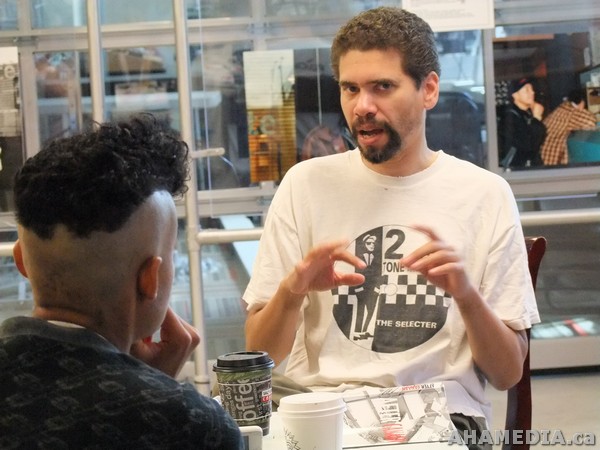
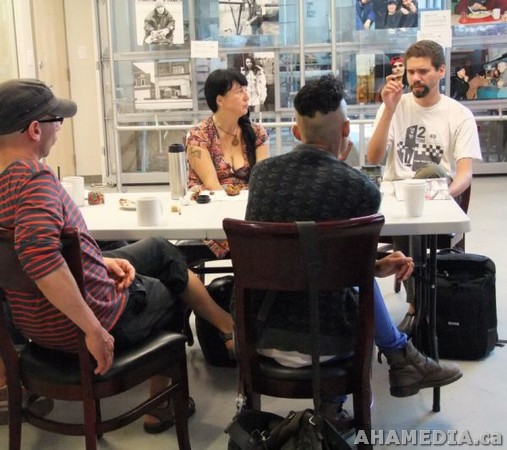
Below are photos and videos of Wayde Compton sharing history of the African American community in the DTES from a writer and historian’s perspective.

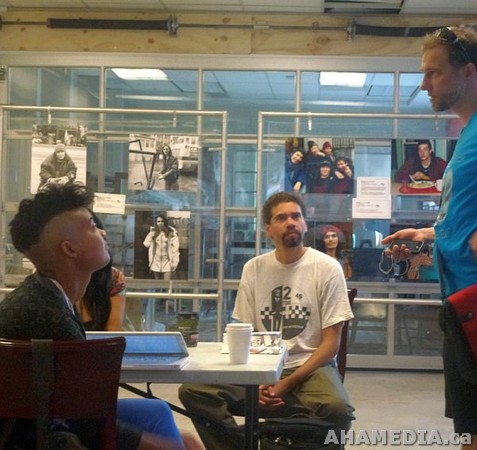
Devon Martin aka Mr Metro’s music and slam poetry class at LifeSkills Centre in Vancouver Downtown Eastside (DTES)
LifeSkills Centre’s Music and Poetry Class on Fridays 1-3
With Devon Martin aka Mr. Metro – professional music producer on keyboard and beats!








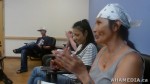

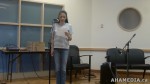
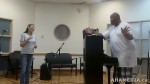


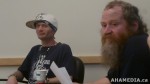
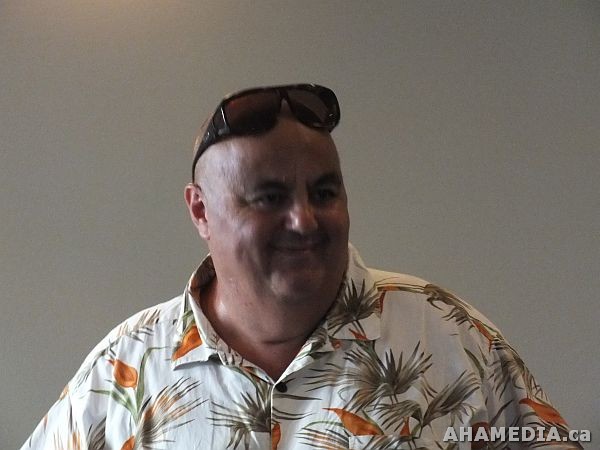
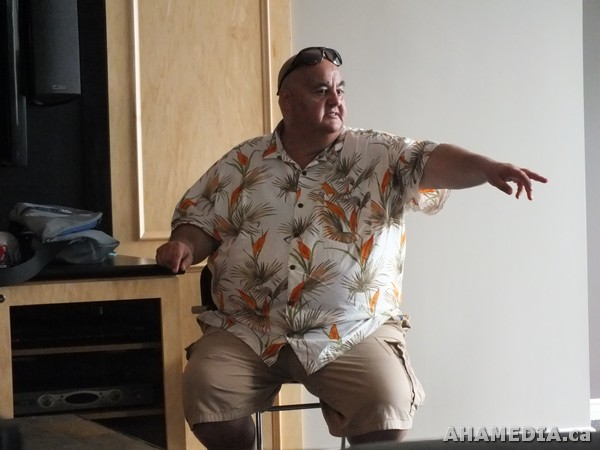
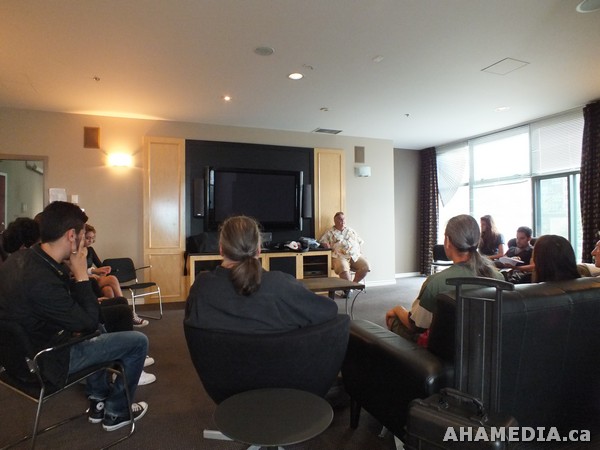
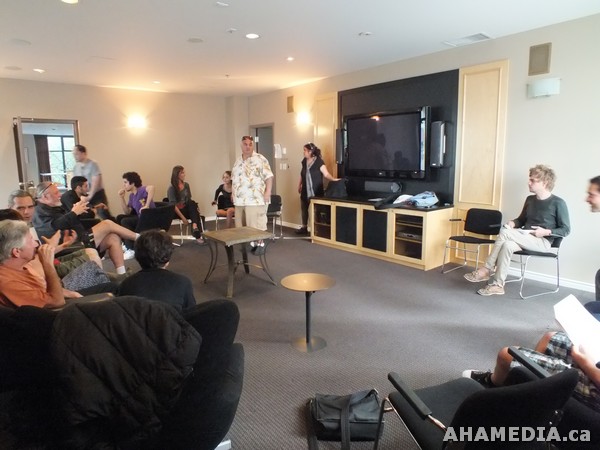
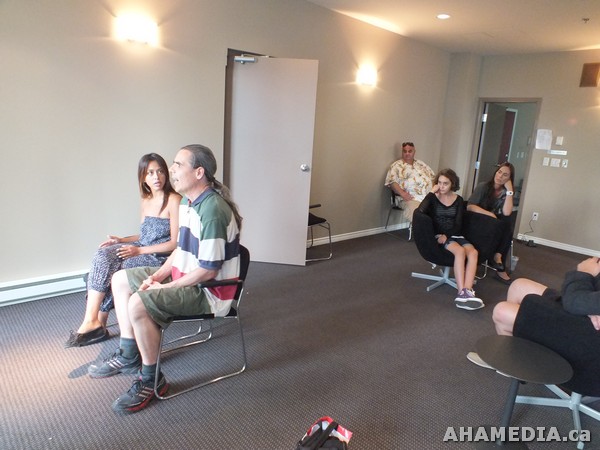
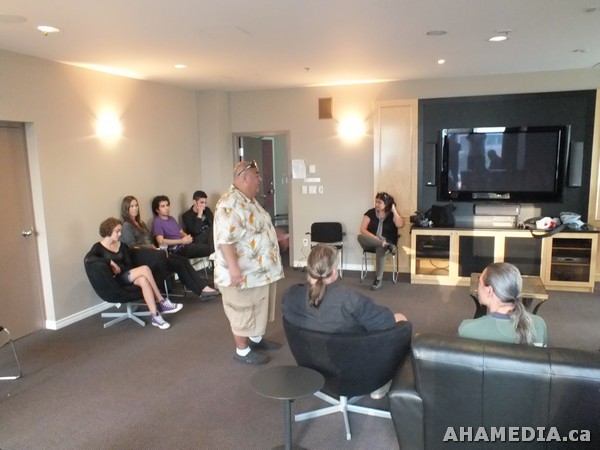
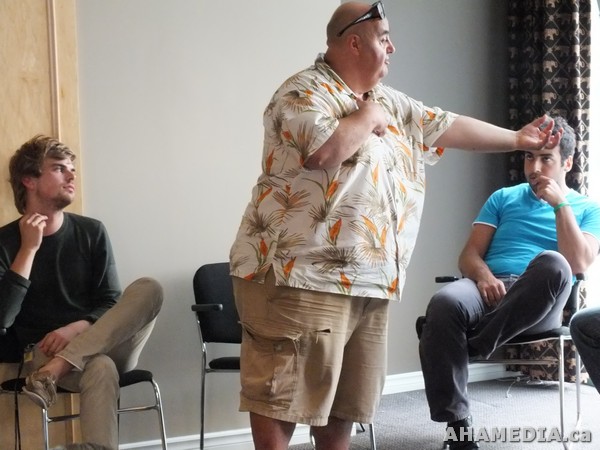
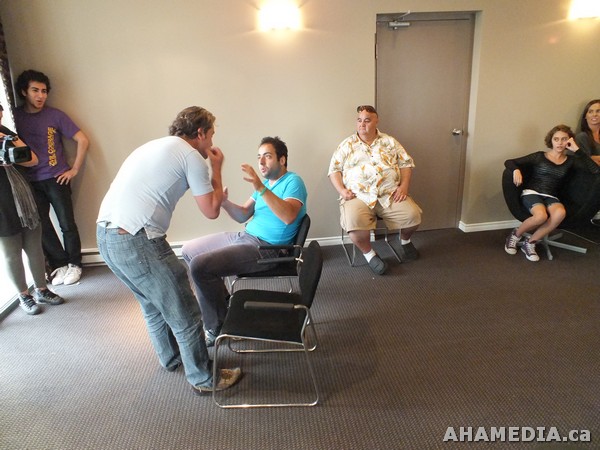
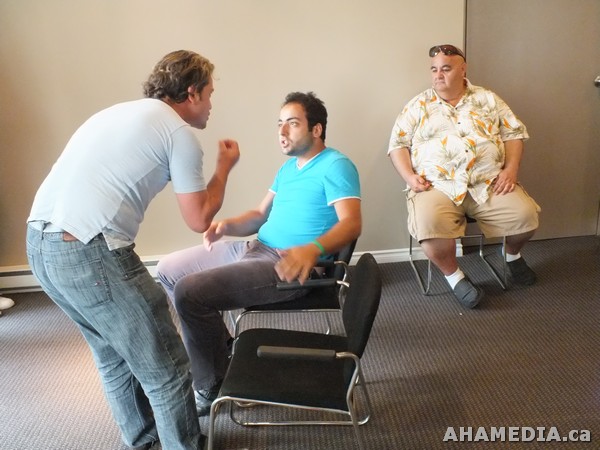
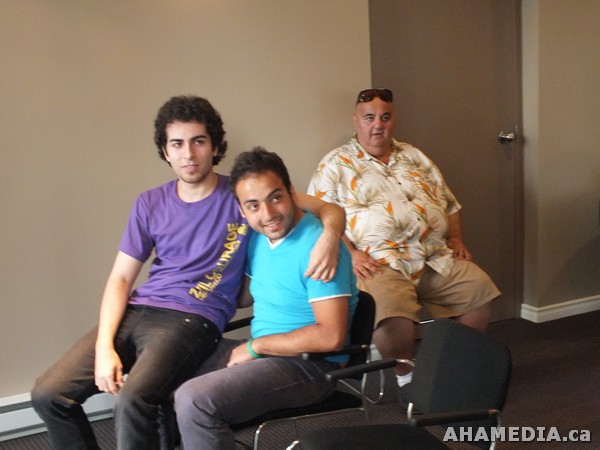
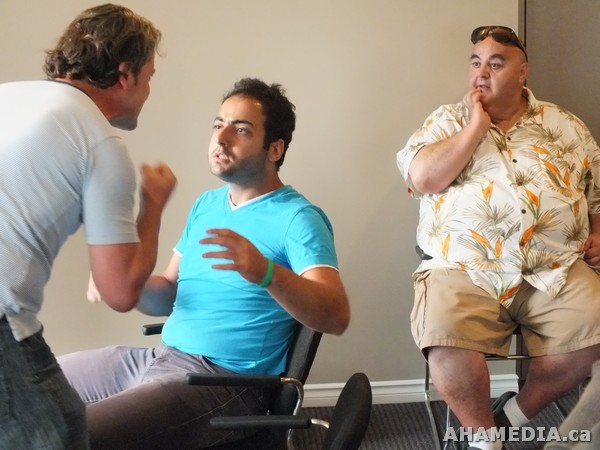
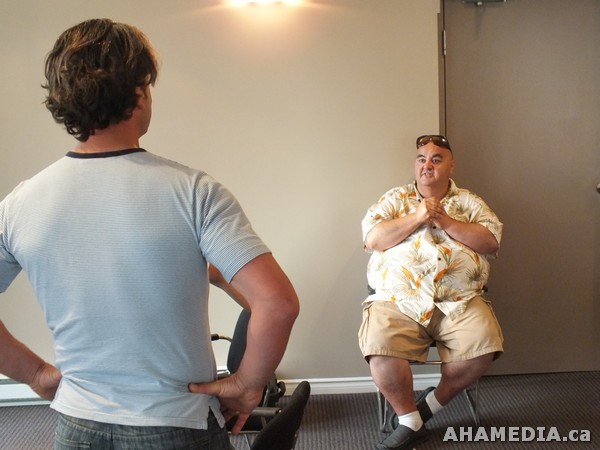
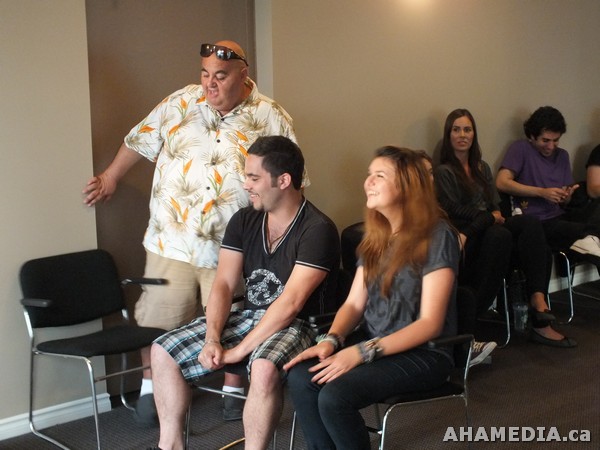
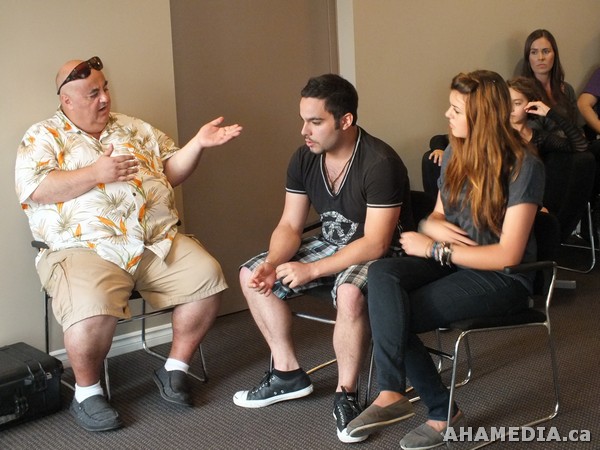
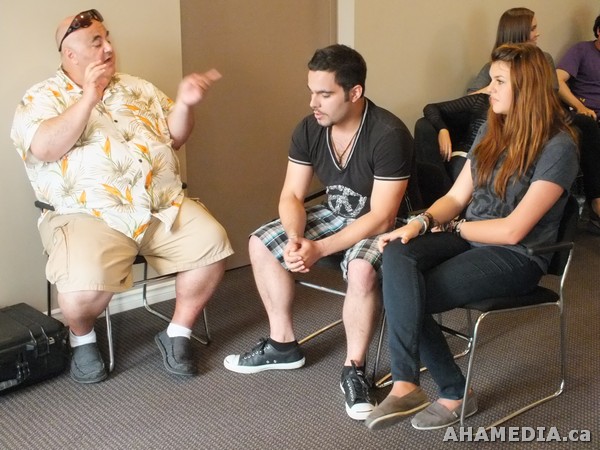
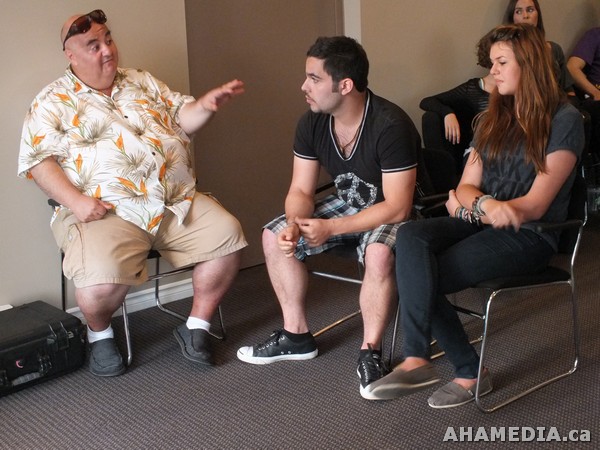
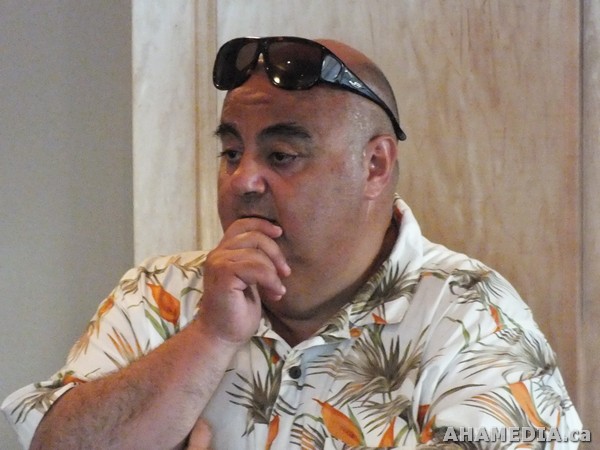
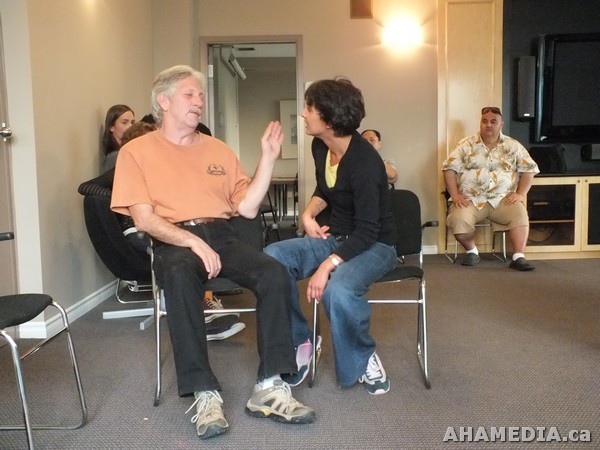
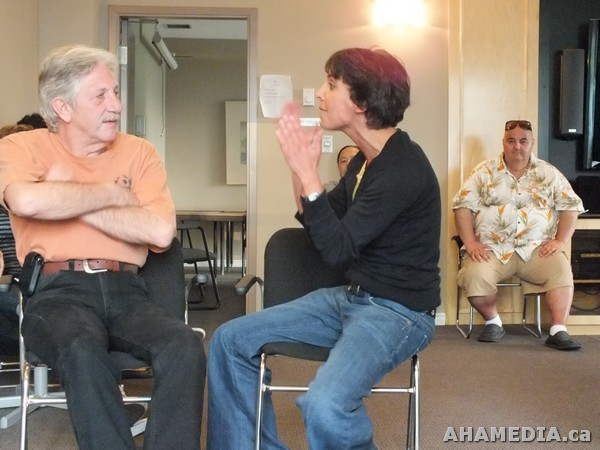
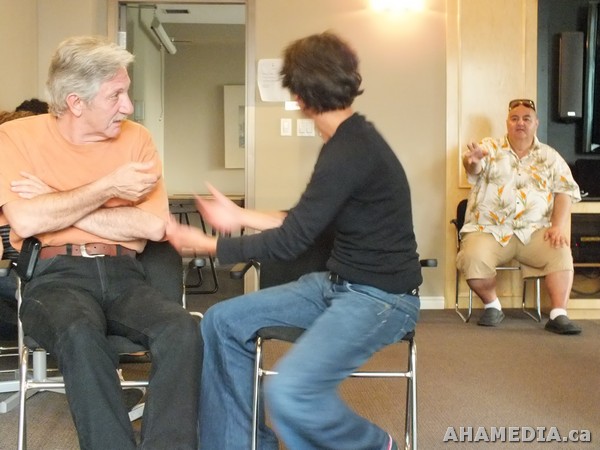
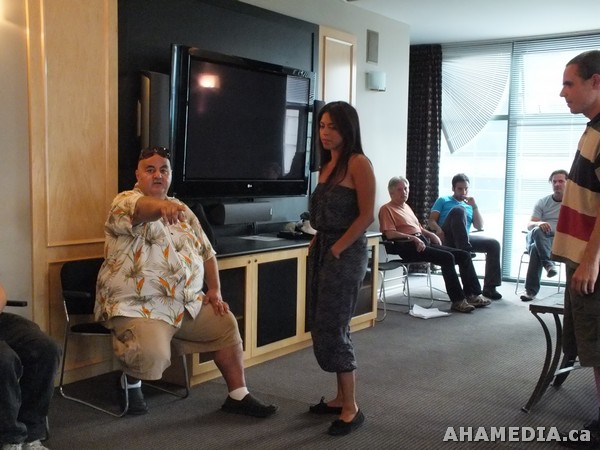
John Samaha – Character Actor, Comedian and Presenter teaches acting workshop to students in Vancouver
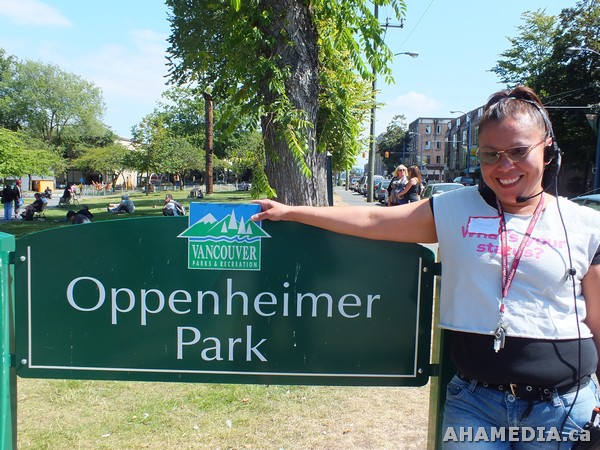
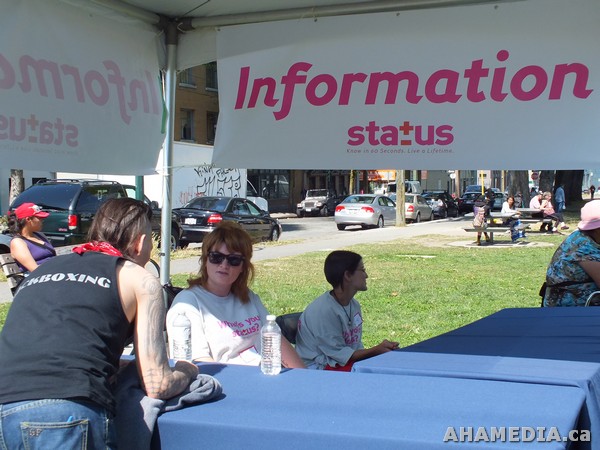
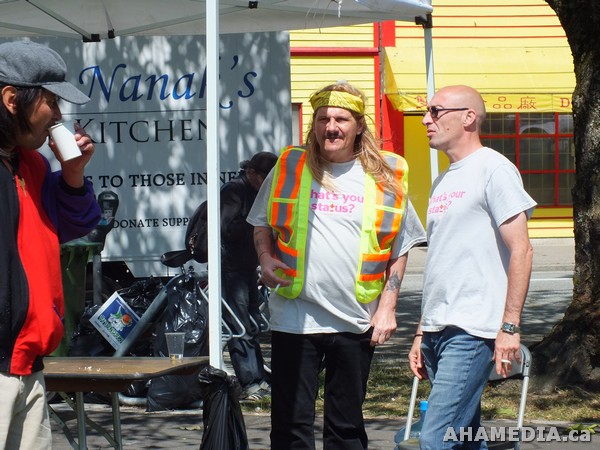
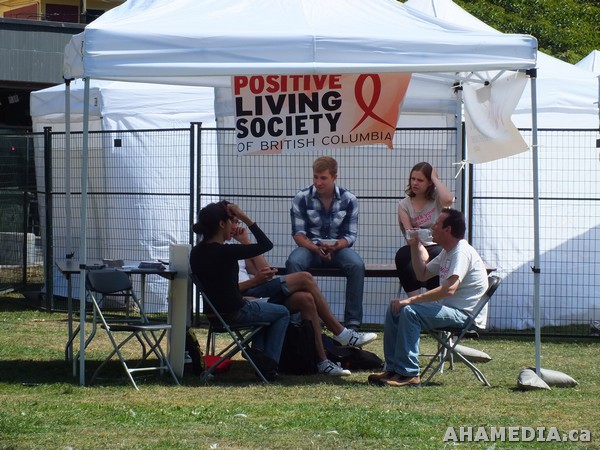
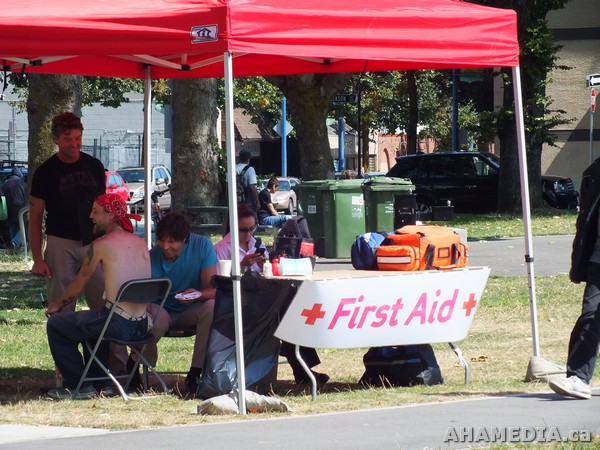
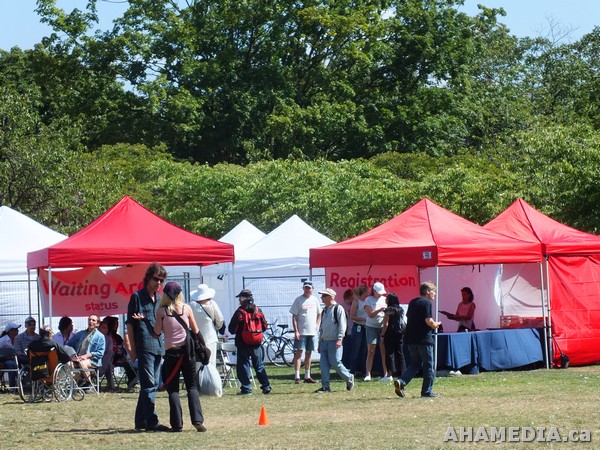
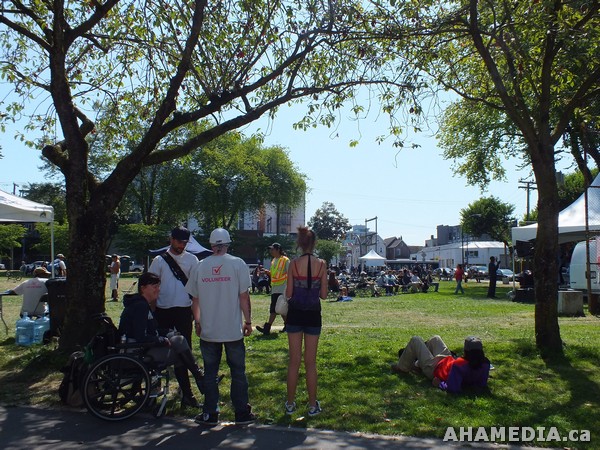
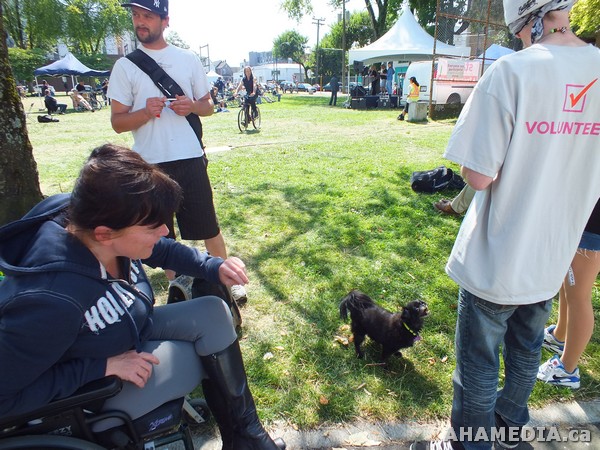
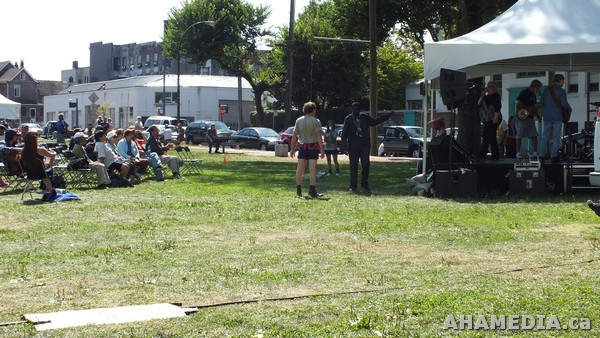
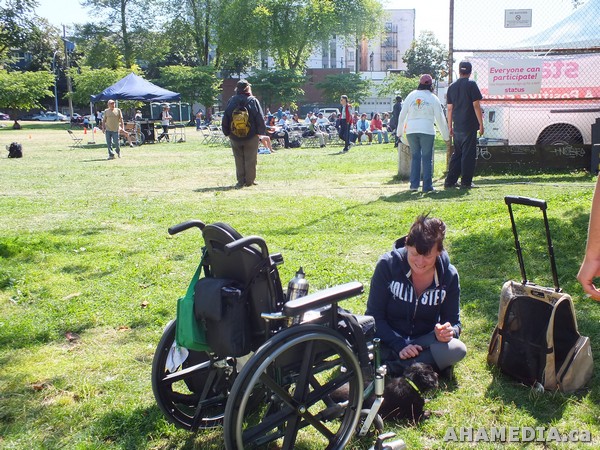
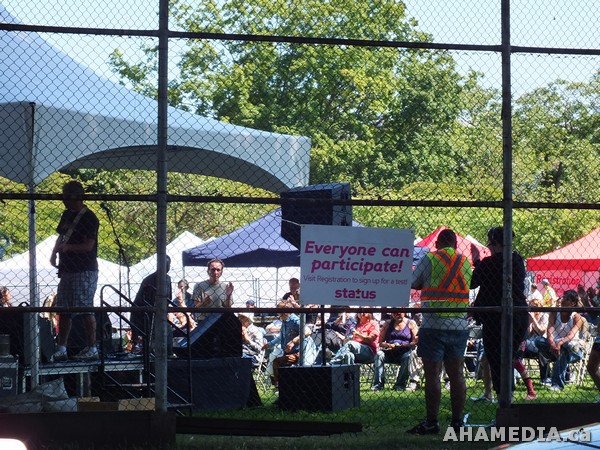
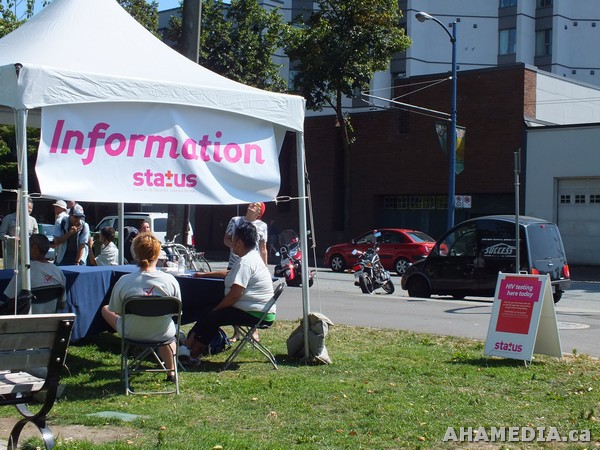
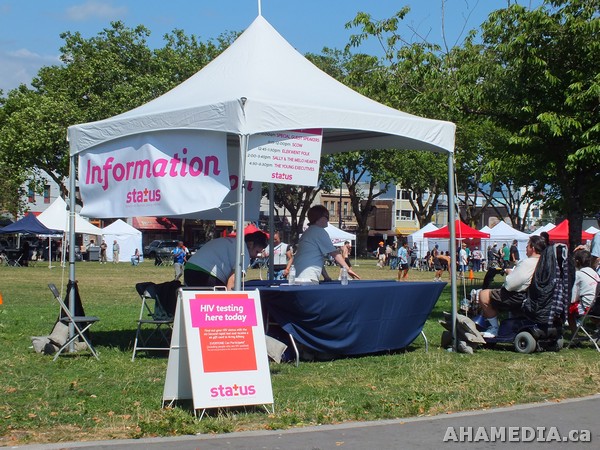
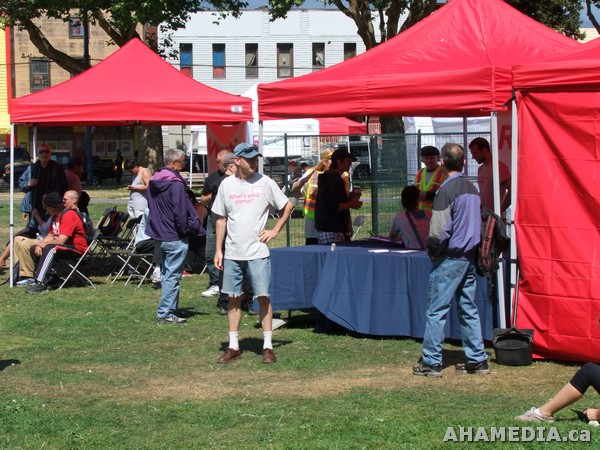
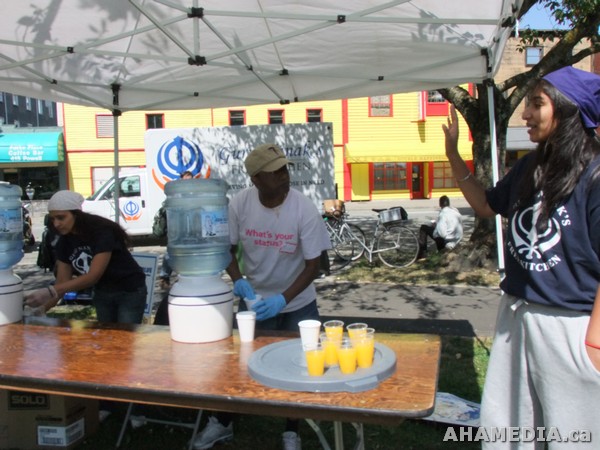
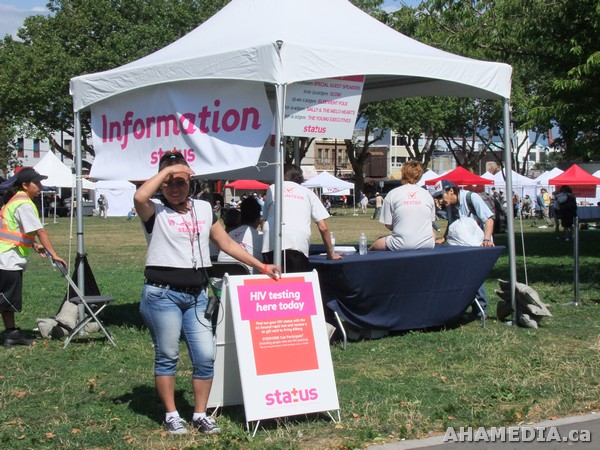
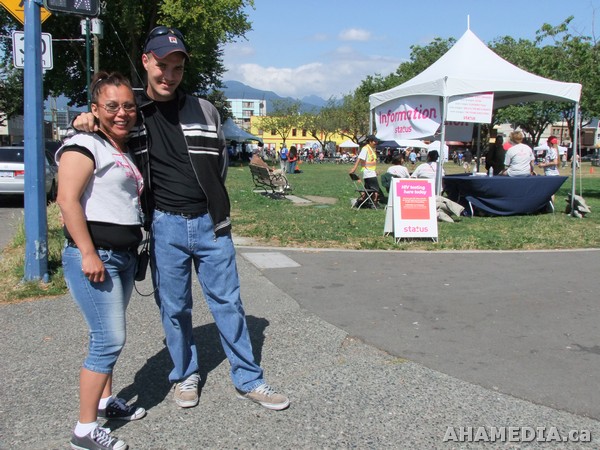
HIV Testing for Status Campaign at Oppenheimer Park in Vancouver Downtown Eastside (DTES)
From What’s Your Status
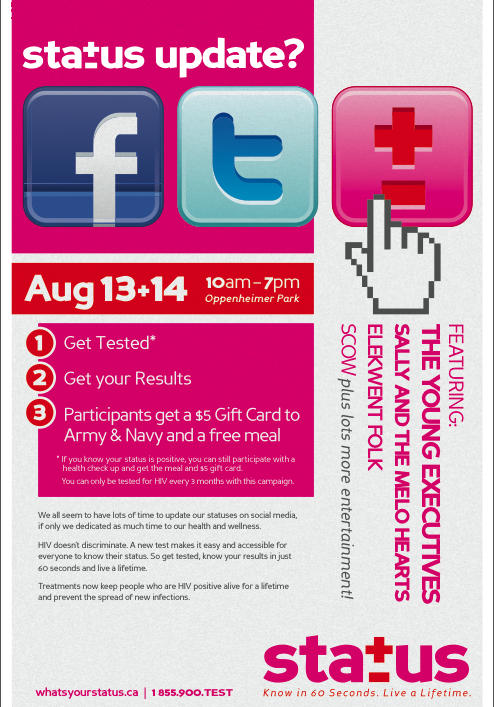
Together we can radically stop the spread of HIV and AIDS through identifying participants who are positive. The earlier you learn your status and start treatment you significantly lower the risk of transmitting this disease to someone else.
Finding out your HIV status is positive used to be thought of as a death sentence. This is no longer the case because of pioneers in medical research like Dr. Julio Montaner and the BC Center for Excellence in HIV/AIDS who have developed a highly active antiretroviral therapy (HAART) for people living with the disease that can prolong healthy living for a lifetime and reduces the risk of HIV transmission. Along with this ground breaking research, a Point of Care test (similar to a test a diabetic would take) has the ability to screen for the virus in 60 seconds.
We are initiating a HIV testing, treatment and education campaign in the downtown eastside community (DTES). This program is a pilot project linking peers within our DTES to information and resources that they need and are available to them within the PHS programs that currently exist as well as special summer outdoor events.
Our objectives are to test and educate as many people from the DTES community as HIV screening is an important part of preventative health care for everyone. We also intend to link people living with a HIV positive status to all the resources and support that are available to them in their community.








Follow Us!


 AHA Media