A tale of two Homeless Cities – Vancouver and Washington D.C. using cellphones, blogs and emails to get connected
On Sunday April 4th, thousands of Vancouver folks marched in solidarity to support the Grand March for Housing. which demand immediate government action to end homelessness, build social housing, protect rental housing and raise welfare and minimum rage rates.
To empower and build the Vancouver Downtown Eastside community capacity and connectivity, the Fearless City Mobile Project was developed:
The Fearless Mobile City project is a two-way social media system for marginalized residents and artists of Vancouver’s Downtown Eastside (DTES). It is an interactive communication system that uses Mobile Muse 3’s technology platform, a free wireless mesh network, distribution and training with mobile handsets, and live screens in public spaces. Participate in Fearless City at live events in and around our inner-city neighbourhood to create community generated media while confronting the digital divide.
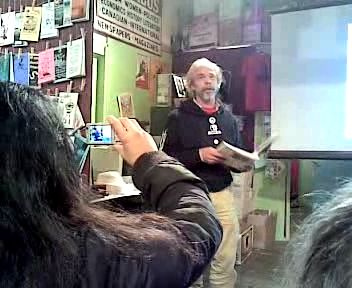
In this photo, a cellphone is used to take a photo during a presentation by Hendrik Beune
——————————————————————————————–
AHA MEDIA is proud to still participate in Fearless City Project ! http://www.netsquared.org/projects/fearless-city-mobile
From engaging with the public through Fearless projects, we developed our own unique way of doing event coverage and citizen journalism as we build our own AHA MEDIA website.
We at AHA MEDIA are glad for the opportunities from Fearless City that help pique our interest into mobile phone technology and all the ways it has helped our Downtown Eastside Community.
—————————————————————————-
In another city – Washington D.C. an article in the Washington Post describes how their homeless use cellphones, blogs and email to stay on top.
On D.C. Streets, the Cellphone as Lifeline
Homeless People Turn to Technology to Track Assistance and Opportunities
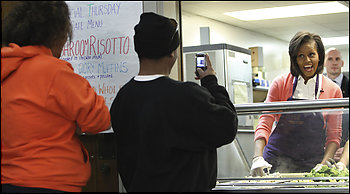
.A patron of Miriam’s Kitchen uses a cellphone to take a photo of first lady Michelle Obama as she helps serve lunch. “Phones are really a lifeline for many people,” says Adam Rocap, director of social services at Miriam’s Kitchen. (Martinez Monsivais – Associated Press)
Advocates who work with the District’s homeless estimate that 30 percent to 45 percent of the people they help have cellphones. A smaller number have e-mail accounts, and some blog to chronicle their lives on the streets.
When Laura Zeilinger, deputy director of program operations for the D.C. Department of Human Services, conducted housing assessments of a couple of thousand people living on city streets last summer, she was surprised by how many gave her cellphone numbers and e-mail addresses.
“Phones are really a lifeline for many people,” said Adam Rocap, director of social services at Miriam’s Kitchen, a nonprofit drop-in center for the homeless. During a string of attacks against homeless people sleeping downtown in the fall, two victims called 911 for help after they were assaulted, he said.
Please read the full article in the Washington Post on how cellphones help empower D.C.’s Homeless community lives
Follow Us!


 AHA Media